


Style as Evidence
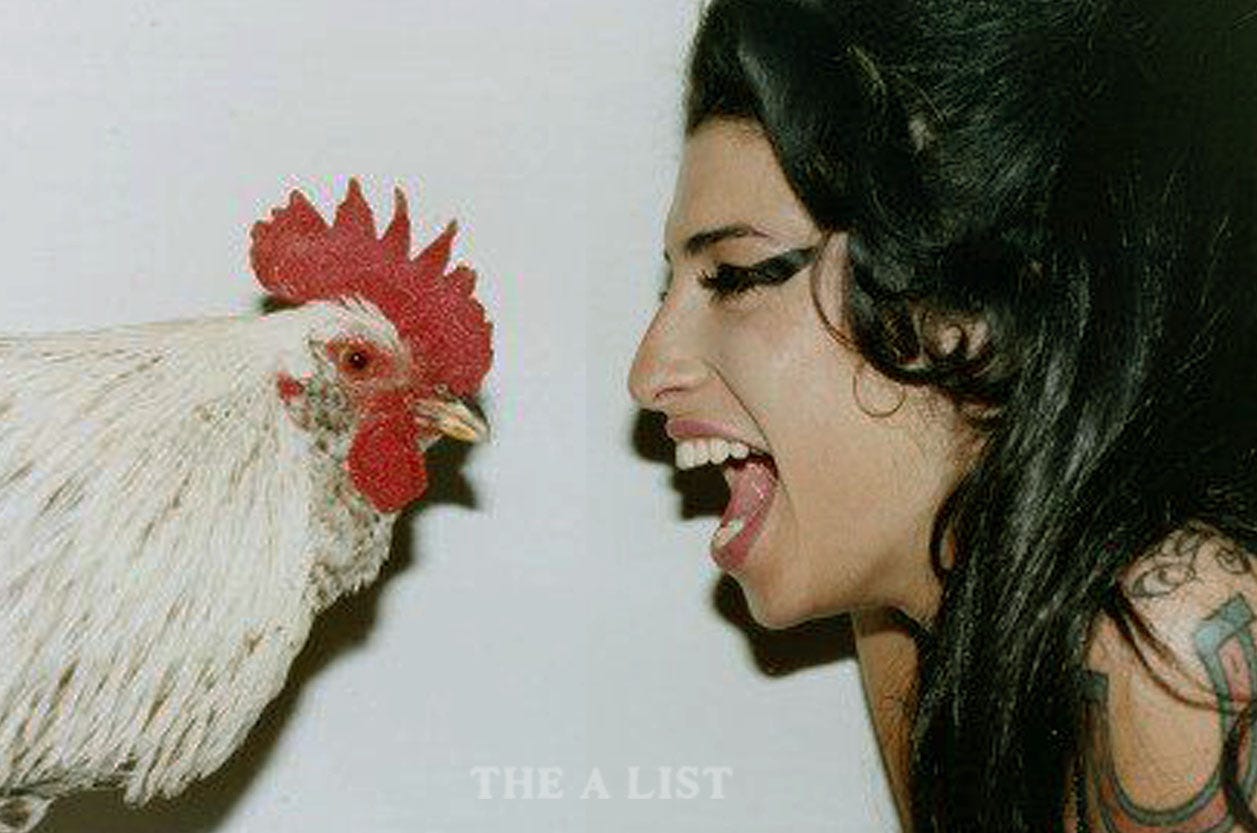
Your style is a self-fulfilling prophecy.
What you wear shapes how you behave, how the world responds, and who you eventually become. Therefore, style is not metaphorical. It’s behavioral.

To this day, when I hear the pitch of that piano key, the thump of the bass, I feel my head start to swim.
I can feel her singing as if she’s right in front of me; I can feel the power in the baseline that thumps with my heartbeat. I feel like she transferred all of her emotions into my chest; every memory so amplified I see it all right in front of me, as if I was watching a film of my life.
Amy Winehouse was a living paradox. She could come off sharp, even aggressive, and yet she was impossibly warm, charming, and bold. Her curls piled high on her head, her raspy laugh filling the room, she carried a mischievous charm that contrasted beautifully with a voice that sounded like it belonged to someone decades older. She seemed completely at home in herself. She felt familiar, like a friend who’d tease your hair before a party, then lean in to warm your lash curler with a struck match, smiling like it was nothing at all.
Its impossible to separate who she was with how she dressed because Amy Winehouse was a master of personal style. I don’t know if it was intentional; I don’t know if her best looks were created in five minutes or 5 hours, but however they ended up; they belonged entirely to her.
The Signature
(Deliberate + Self-Assured)
Presentation as clarity
Unlike most, Amy was fully herself from a very young age.
Long, dark hair that went past her shoulders, a cheeky grin that perfectly matched her tomboyish charm. She sang because she loved to sing, skipped class when she felt like it and was never running short on opinions.
Friends talked about how sure she was of her taste, how deeply she loved jazz, how seriously she took music, even when she didn’t take much else seriously. She dressed the way she liked, for the life she was already living. Everything she wore looked like she grabbed it as she ran out the door. I dont know if she ever felt the need to think twice.
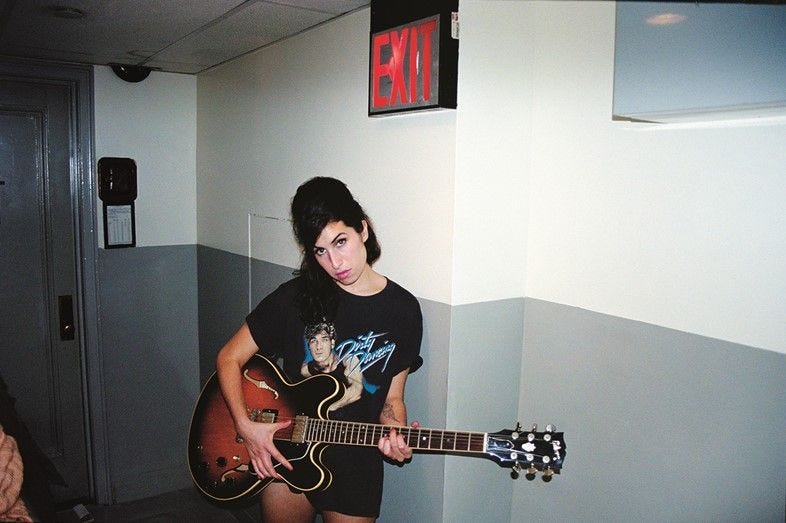
As her life moved into larger rooms, her look became more defined. The hair went higher, the liner thicker, the dresses closer to the body with a neckline that went as low as the beehive went high. She didn’t dress to impress. She dressed the way people do when they’re comfortable in their own skin.
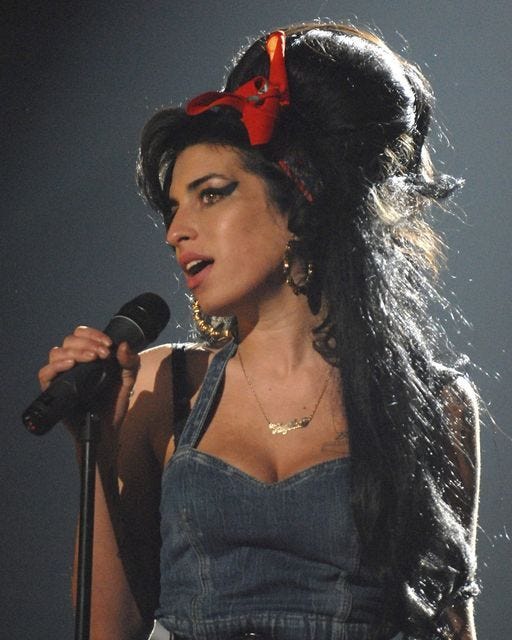
This is what the Signature looks like when it’s lived, not performed. Appearance as authorship. Style as a quiet extension of self-knowledge.
Amy knew who she was. And she wore it with ease.
The Seeker
(Deliberate + Neutral)
Presentation as experiment
After the global success of Back to Black, Amy’s life began to unravel. She was in a deeply volatile relationship with her on-again, off-again boyfriend. Drug use escalated within the relationship, and their dynamic became a primary emotional driver in her life. At the same time, her father decided to re-introduce himself into her life, with several documented incidents show he intentionally blurred the boundaries between parental care, management, and exploitation.
The tabloids followed her relentlessly. She was photographed leaving clubs, entering cars, crying, bleeding, laughing, collapsing. One of the most cited moments occurred in St. Lucia, where Amy had gone to recover, and her father arrived with a camera crew, turning a fragile period into content.


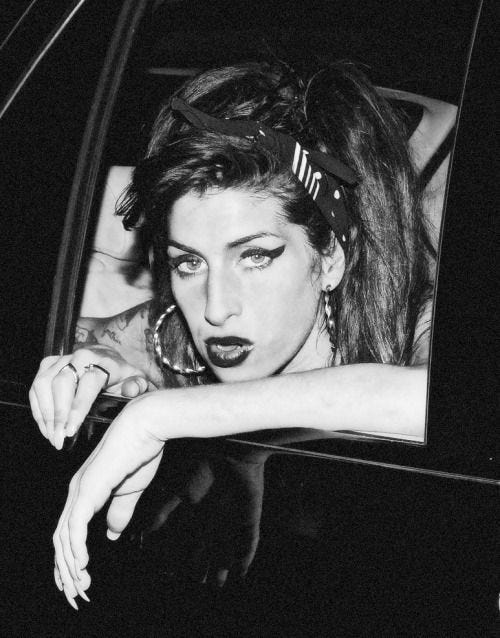
This is where her appearance begins to look inconsistent, not because she was searching for a new identity, but because maintaining consistency required energy she no longer had. Makeup smeared. Clothing fit poorly or slipped out of place. Her style began to change, but not in the way people like to describe it. She wasn’t trying to experiment, she was beginning to feel exhausted.
This is the Seeker. Not as reinvention, but as exposure.
Unlike Bourdain, whose Seeker phase expanded him into the world, Amy’s Seeker phase was an inward collapse. Her appearance started reflecting the effort it took just to show up. The uniform that so clearly defined her now demanded energy she was already spending elsewhere.
She was still choosing, still trying, but the certainty that once guided her style had been interrupted by a life that no longer felt like her own.
The Ghost
(Disengaged + Withdrawn)
Presentation as survival.
In the final years of her life, her appearance lost its cohesion. The elements people associated with her appeared haphazardly, tangled and matted. Her larger-than-life hair deflated, her makeup appeared watery, as if she was hanging on by a thread. It was impossible to mistake her for anyone else, but she was a shell of the woman she was.
Her life narrowed. Her health deteriorated. Attempts at recovery were repeatedly interrupted by demands to perform. She was moved from place to place, scheduled, put onstage even when she was visibly unwell. The most public example came in Belgrade in 2011, where she was pushed into performing despite clear incapacity and was met with boos from the crowd. The footage circulated immediately.
The images twist my stomach, watching her hold herself so desperately as if her footing in reality depended on it. She was ripped of her personality; devoid of the passion that summoned her talent, and propped up on stage for our enjoyment.
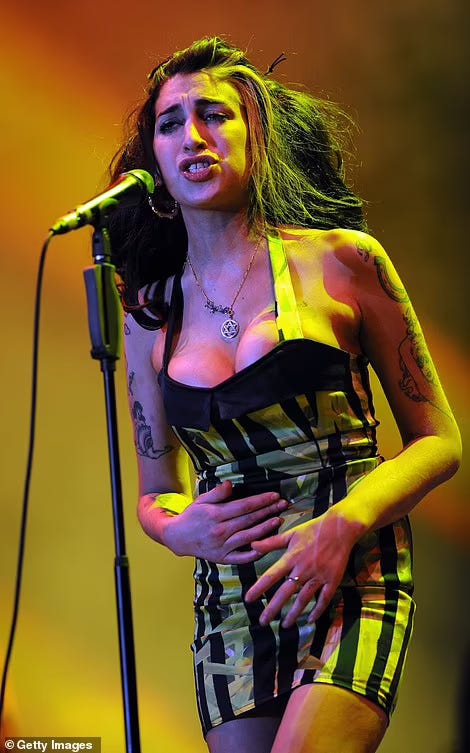
The Ghost is Disengaged and Withdrawn.
This alignment forms when someone no longer has the capacity to maintain themselves in public. Appearance becomes incidental because survival takes precedence over expression.
What disappeared wasn’t her taste or her talent. It was her sense of self.
The breakdown of upkeep, the collapse of form, the evidence was there, long before the end.
From the outside, it’s easy to read this as neglect, apathy, or collapse. But in reality, she was surrounded by people who needed her functioning more than they needed her well.
The Transformation
The Signature → The Seeker → The Ghost
Her style wasn’t costume or rebellion. It was evidence. And when you read it through the Alignment Chart, the pattern becomes unmistakable: The woman she knew, the woman she tried to hold together, and the woman she collapsed into being.
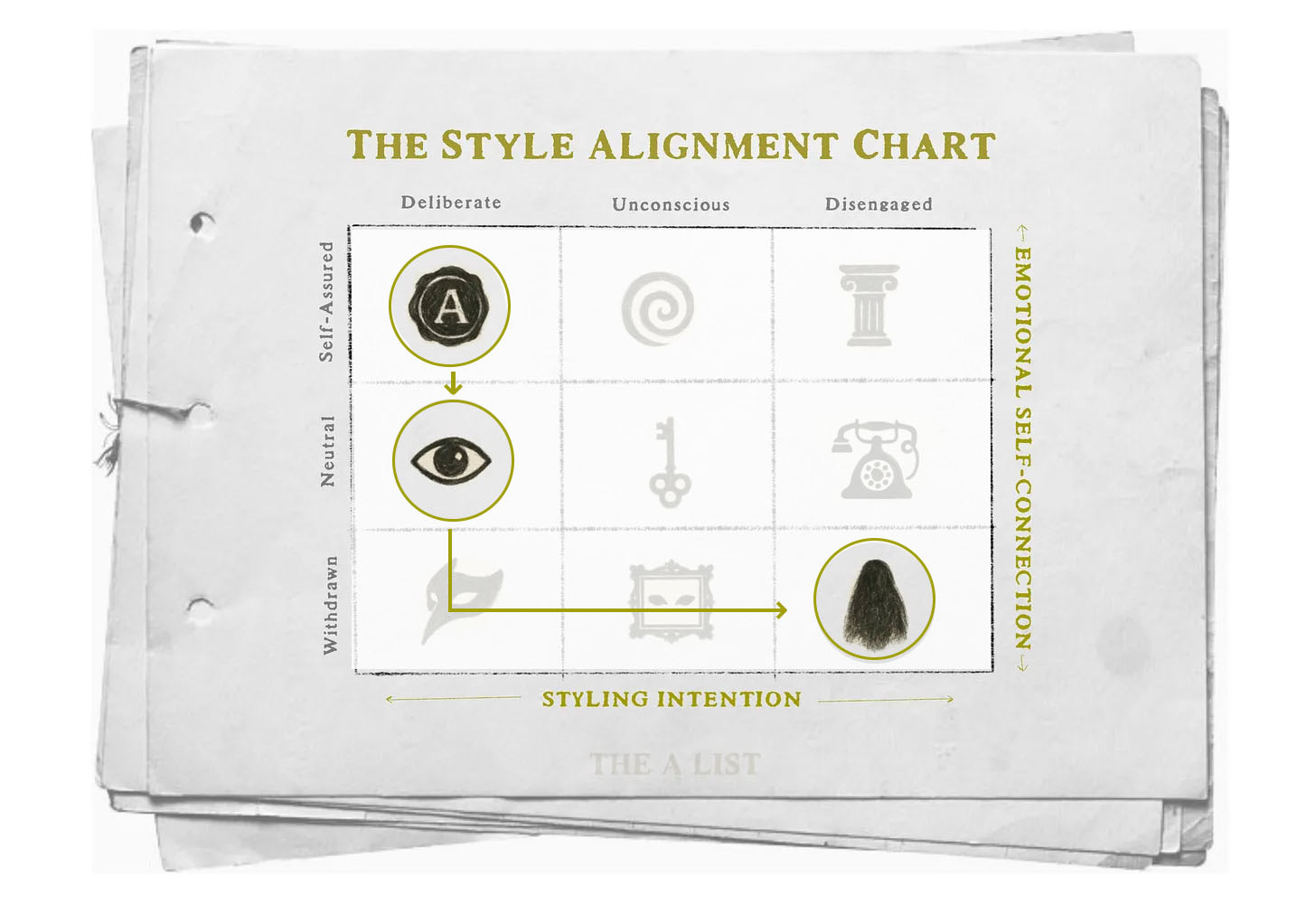
Style does not hide the truth. It reveals it. Sometimes long before the person wearing it can say it out loud.
People tend to talk about Amy Winehouse in extremes.
As genius or cautionary tale. As talent or tragedy. But what’s easy to forget is how human she was in the ways that mattered most.
We love her because we envy the grace she had, the non-preformative way she went about her life. We all want a friend like her, we want to be the friend that’s like her. Amy showed up as she was, long before the world began pulling her apart.
She will never be defined by her lows, because no matter how lost she was, she still found a way to give to the world during her greatest time of need. When everyone turned their back on her, when we ridiculed her, patronized her, abandoned her, Amy gave a gift to this world that still numbs our own sadness to this day. Amy was never glamorous, Amy was real, and when we think of her, thats the feeling that remains.
What survives isn’t the spectacle. It’s the sincerity.
And for me, that’s enough.
With great personal aesthetic,
Alexandra Diana, The A List
If you or anyone you know is struggling with addiction or suicidal thoughts, help is available.
In the United States, you can call or text 988 for the Suicide & Crisis Lifeline.
You are valuable and your life is worth living.


Beautiful and honest piece on Amy. Never stop writing — this analysis was everything 🤞🏼
This analysis makes my heart ache for her all over again. 💔 What a beautiful and tragic piece.