


POSTURE is the exclusive syllabus on identity, aesthetic reinforcement, and the self-fulfilling nature of style.

Your style is a self-fulfilling prophecy—and here, you learn to write it deliberately.
If I asked you what you wore three days ago… could you tell me?
Not what you usually wear. Your actual clothes, the color of your shirt, your exact socks, down to the color of your laces.
I’d be willing to bet that you’d probably spend more time trying to remember than you did choosing it.
In a world where attention is the most expensive commodity, we are choosing autopilot and invisibility.
We have become to lazy to look like ourselves.
When I had just graduated from college, I drove to work each day.
Once you get over the jump-scare that is me driving (I was taken off my parents insurance long ago and replaced with the far more responsible choice: my husband) It took me around thirty minutes, and other than the music I blasted from my 2008 Jeep, it was a boring drive. Latte in hand, the same route traversed, those thirty minutes passed as if they barely existed. I’d arrive in the parking lot with this brief flash of panic—Did I stop at that red light? Was there traffic? Obviously, I had arrived safely, but I couldn’t tell you a single detail of how.
The brain, when given repetition, fills in the blanks and checks out. It’s efficient, it’s adaptive, but its dangerous. Because when something becomes daily, expected, normal, it becomes invisible.

When you get dressed, your mind isnt there.
It’s already clocked in, already in that meeting, already panicking about those Valentine’s Day reservations you still haven’t made. Psychologists call this “automaticity”, the brain offloading routine tasks to free up cognitive space. You might know it by its sexier stage name: Multitasking. What it really is, is absence.
You’re thinking about everything except the thing you’re doing.
Multitasking makes us think were productive.
But no matter how you cut it, efficiency will always be the enemy of choice because choice is where your identity actually lives.
We get dressed the same way we use our phones, and we wonder why everyone is starting to look the same.
I talk about this often, this epidemic of sameness that we are experiencing.
In a time where the world is supposed to be our oyster, we jump inside the cozy, blue lights of the algorithm and seek out ways to look the same as everyone around us.

 Tiktok failed to load.
Enable 3rd party cookies or use another browser
You don’t scroll because you care, you scroll because youre restless.
The reward isn’t meaning; it’s relief. A low-friction stream of stimuli that keeps your brain soothed, occupied, anesthetized.
And just like your clothes, you rarely remember what you consumed.
You got dressed. You arrived. But can you actually say that you were there?
Most people don’t think of themselves as passive. They think of themselves as practical.
Low-maintenance. Busy. Efficient. They tell themselves they know what works, and that knowing what works is the same thing as knowing who they are.
What you fail to see is that you can be both, if not all, of these things at once. You can be incredibly passive and busy, low-maintenance and efficient. None of these are mutually exclusive, and its this very guise that is ruining your perception.
Passivity looks like avoiding decisions that might draw attention, invite comment, or make you explain yourself. It looks like mistaking familiarity for fit (my favorite line: I just like to be comfortable!) because something you’ve worn before feels safer than something you haven’t tried yet.
Have you ever found yourself wearing the same kind of outfit to the same kinds of events? I have a friend who hates dresses, and yet every time a wedding comes around, she seems literally incapable of wearing something other than a floor-length gown. Why is this? Because the socially acceptable, digestable norm is a safer option that going outside your comfort zone to express who you really are. The trial and error is scarier than the knowledge that one day, you’re going to catch your reflection, and have no idea who that person is.
If you’re feeling slightly defensive right now, that’s normal.
If you’re mentally arguing exceptions—but I do think about it sometimes—that’s also normal. This isn’t a test you pass or fail. It’s a mirror. And the funny thing about mirrors is they work whether we like what they show us or not. Don’t shoot the messenger, believe it or not, I’m on your side.
Your brain, my brain, is designed to conserve energy.
When you repeat a behavior often enough, your mind learns that it doesn’t need to stay fully present, and creates a lovely little shortcut.
Psychologists call this a habit loop: cue, routine, reward. The cue is the morning. The routine is getting dressed. The reward is not having to think too hard.
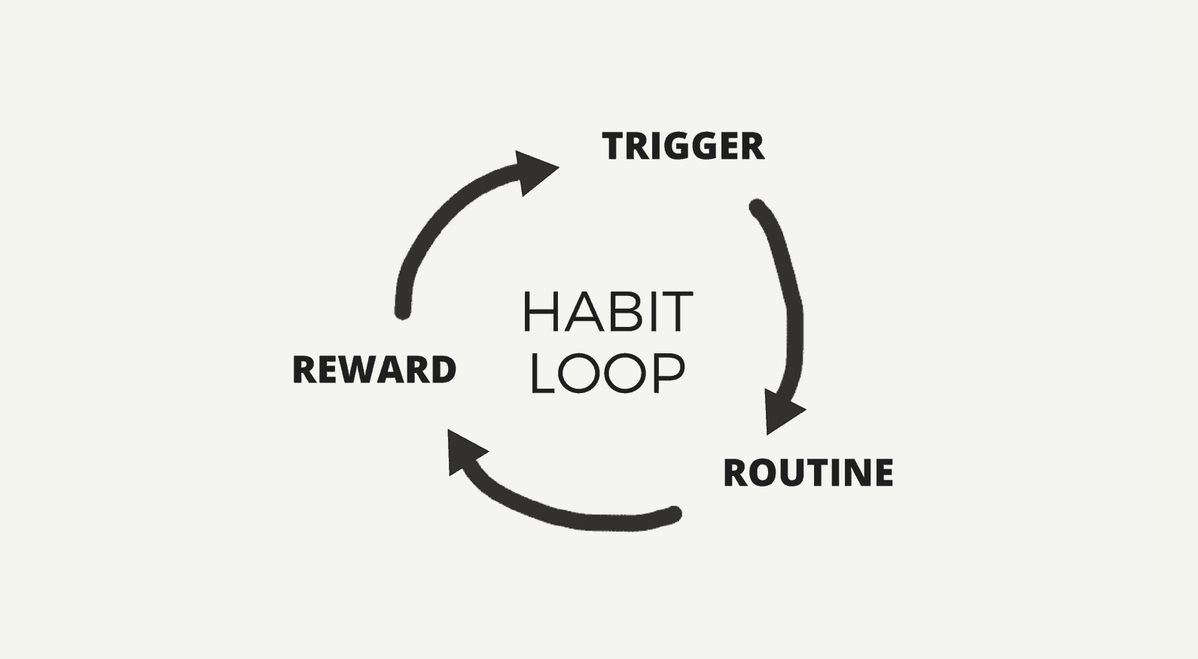
This loop becomes more and more efficient until your brain is able to outsource your options. What you wore yesterday is good enough for today, your attention fragments, part of you is here, but the larger part of you is somewhere else. This is cognitive offloading: using repetition to free up mental space.
Passive consumption, of content, of clothing, of aesthetics, trains acceptance over intention. You become very good at saying “this is fine” and very bad at asking “is this me?”
And herein lies the fatal flaw: when you get so used to autopilot, when you surrender fully to the efficiency machine, you detach yourself from authorship.
You no longer take responsibility for how you look, essentially telling your brain “Eh, I am what I am.” It comes so easily and feel so natural, but its always the sticky-sweet honey trap that swallows us whole in the end.
Keep reading with a 7-day free trial
Subscribe to THE A LIST to keep reading this post and get 7 days of free access to the full post archives.