


POSTURE is the exclusive syllabus on identity, aesthetic reinforcement, and the self-fulfilling nature of style.
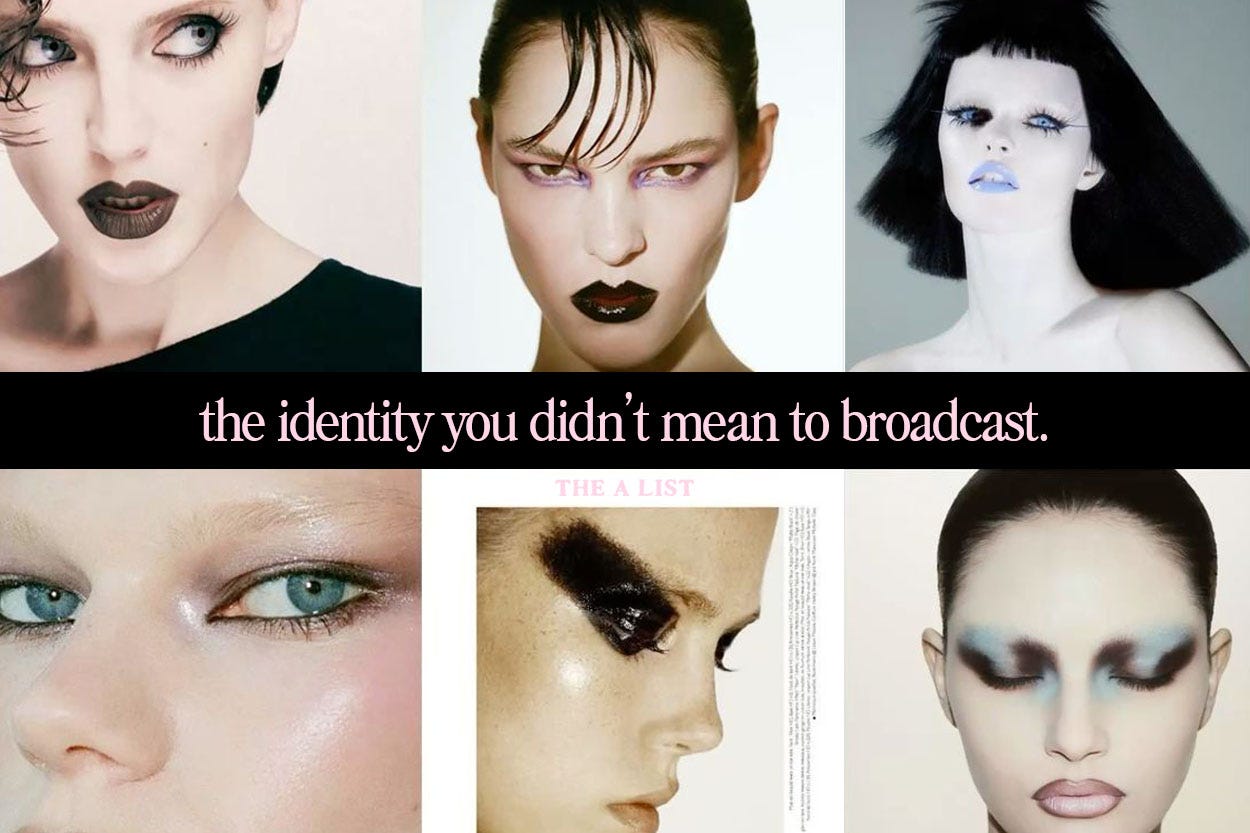
Like a moth to a flame, we all envision this moment:
Walking through the double doors, your presence casts a spell that shifts the gravity around you. As if the room has gone underwater, the music softens, and you feel everyones gaze slowly magnetize towards you. Words pause, pupils dilate, you feel all eyes roaming from your head to your toes, transfixed by your elusive blend of intention and ease. For one suspended second, you feel the present moment press against your skin. And just before the room snaps back into motion, the music rising to full volume, there’s a clean, unmistakable flicker: Pride, clarity, and the rare satisfaction of being seen exactly as you meant.

The fantasy feels effortless, and the reality rarely is.
Presence isn’t a personality trait; it’s an engineered effect. You can shock, you can awe, you can make people uncomfortable: Whatever you do most deliberately is what embeds itself in people’s minds, clinging there with the tenacity of a fly on tack paper.
We romanticize the entrance because we don’t understand how it’s built. The fantasy version of ourselves is coherent, magnetic, unmistakably defined. The real-life version is rarely any of those things. Most people move through the world with a patchwork sense of identity, part instinct, part insecurity, part habit, and their appearance reflects that fragmentation.
The result is a stream of mixed signals: gestures that contradict intention, clothes that don’t match temperament, and an overall impression that doesn’t represent them at all. The imagined moment feels intoxicating precisely because it reveals the alignment we haven’t yet achieved.
In a world where attention is the highest form of currency, there’s one way to cash in that’s never lost its leverage: first impressions.
And despite the cultural myth, you don’t get only one. If you understand how to construct them, you can reintroduce yourself as many times as you choose.
Three seconds.
Thats how long it takes for someone to assume they know exactly who you are.
It’s not the spiteful, arrogance we assume it is, it’s our biology. We literally cannot help it. The human brain wasnt created to wait for context. It pulls from patterns, memories, associations, and heuristics to create a quick, functional impression. You may think you’re neutral, subtle, or hard to sum up, but visually, you’re never neutral. You’re always giving off information.
There are 3 micro-habits that do the most damage.
1. “I’m just throwing something on.”
When you say “I’m just throwing something on,” the intention usually feels harmless: a low-energy choice, something easy enough to get you out the door. But what you’re unintentionally signaling is avoidance, a desire to be seen in the most frictionless, mentally inexpensive way possible.
Here’s what this looks like:
You reach for a tried and true neutral because it “goes with anything”
You put on denim chosen out of habit rather than intention
You skip the pieces with structure or presence because they demand commitment, you perceive them as requiring more attention
This isn’t laziness. It’s reluctance disguised as ease. and that indecision is far more visible than people realize.
The problem isn’t simplicity, it’s the lack of intention. When the pieces don’t relate, the outfit acts like elevator music: designed to bother no one, but memorable to no one. It fades instantly because there’s no point of view tying anything together. When silhouette, palette, and texture don’t relate, the impression isn’t minimalist; it’s unfinished.
You may feel entirely present. But visually, the room doesn’t receive presence. It receives ambiguity. No direction. No authorship. No clear narrative of who entered the space. And if you don’t offer the first impression, people supply their own.
The Adjustment
You don’t need a new wardrobe. You need to make micro-decisions.
Choose one anchor: shape, structure, or palette. Any one of these can carry the entire look if it’s selected intentionally.
Let that anchor determine the rest. If the knit is soft, keep the rest soft. If the denim is crisp, let the top meet it halfway. If the color is muted, commit to muted.
If a single micro-decision can change how you register to a room, imagine what happens when the rest of your presentation is working against you without your consent.
This isn’t the only way you’re being misread…and you might not notice,
but everyone else does.
Keep reading with a 7-day free trial
Subscribe to THE A LIST to keep reading this post and get 7 days of free access to the full post archives.